𝐀𝐋𝐒 𝐃𝐚𝐯𝐚𝐨 𝐂𝐢𝐭𝐲 𝐥𝐞𝐚𝐫𝐧𝐞𝐫𝐬 𝐠𝐚𝐢𝐧 𝐡𝐚𝐧𝐝𝐬-𝐨𝐧 𝐥𝐢𝐯𝐞𝐥𝐢𝐡𝐨𝐨𝐝 𝐬𝐤𝐢𝐥𝐥𝐬 𝐢𝐧 𝐃𝐢𝐯𝐢𝐬𝐢𝐨𝐧 𝐓𝐫𝐚𝐢𝐧𝐢𝐧𝐠-𝐖𝐨𝐫𝐤𝐬𝐡𝐨𝐩
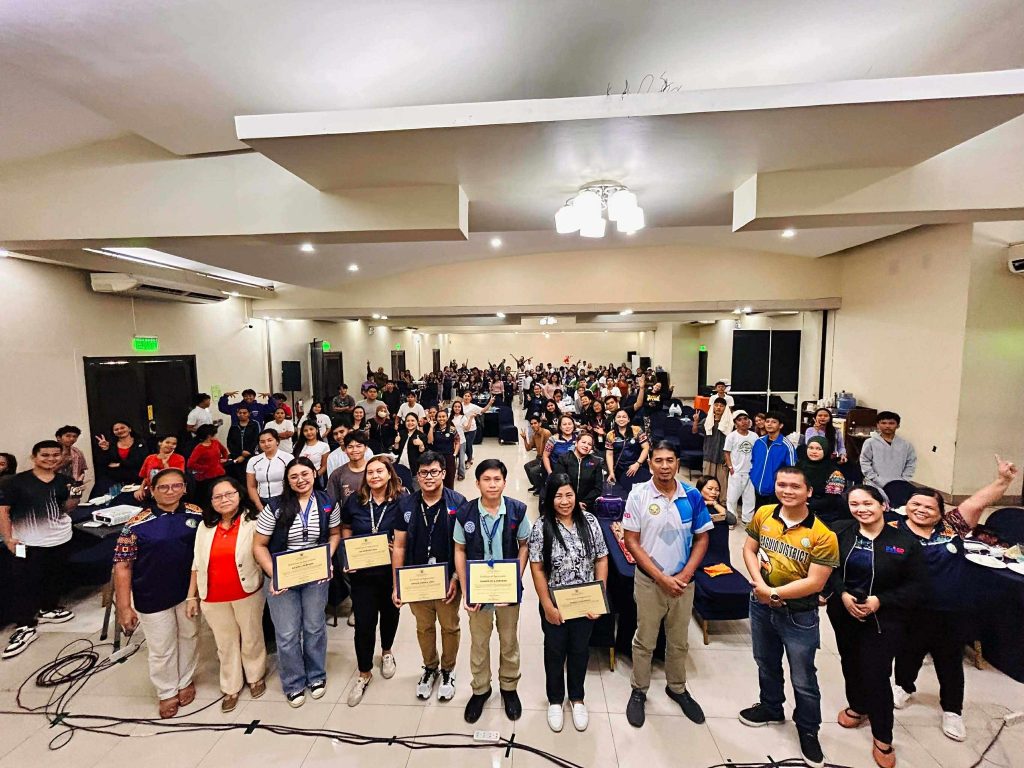
Focusing on empowering ALS learners with practical skills for livelihood and future employment through a TESDA approach, the Alternative Learning System (ALS) Davao City Division conducted a three-day Division Training-Workshop and Capacity Building on Informal Education and Literacy cum Livelihood Skills from November 21–23, 2025, at The Ritz Hotel, Bo. Obrero, Davao City.
The event brought together ALS teachers from all districts of Davao City along with their chosen learners, creating a venue for hands-on learning in career preparation, technical-vocational opportunities, and small business development.
A key session on job readiness was facilitated by Ian Kristina Diao, who introduced participants to the functions of the Philippine Employment Service Office (PESO). Through her discussion, learners understood how PESO can help them find employment, its services, and the schedules of upcoming job fairs they can participate in.
Diao also highlighted that ALS learners will be prioritized in job fairs.
“ALS learners are our priority because the program prepares them for real careers,” Diao emphasized, noting the program’s intent to prepare learners for real-world transitions.
Learners were likewise introduced to the Technical Education and Skills Development Authority (TESDA) through a comprehensive discussion led by Sir Francis Rey Q. Buñawan, TESDA Specialist I. He explained the courses, scholarships, and skill certifications TESDA offers, helping participants recognize viable pathways for further skills development.
The training placed strong emphasis on livelihood skills, beginning with affordable small-business options.
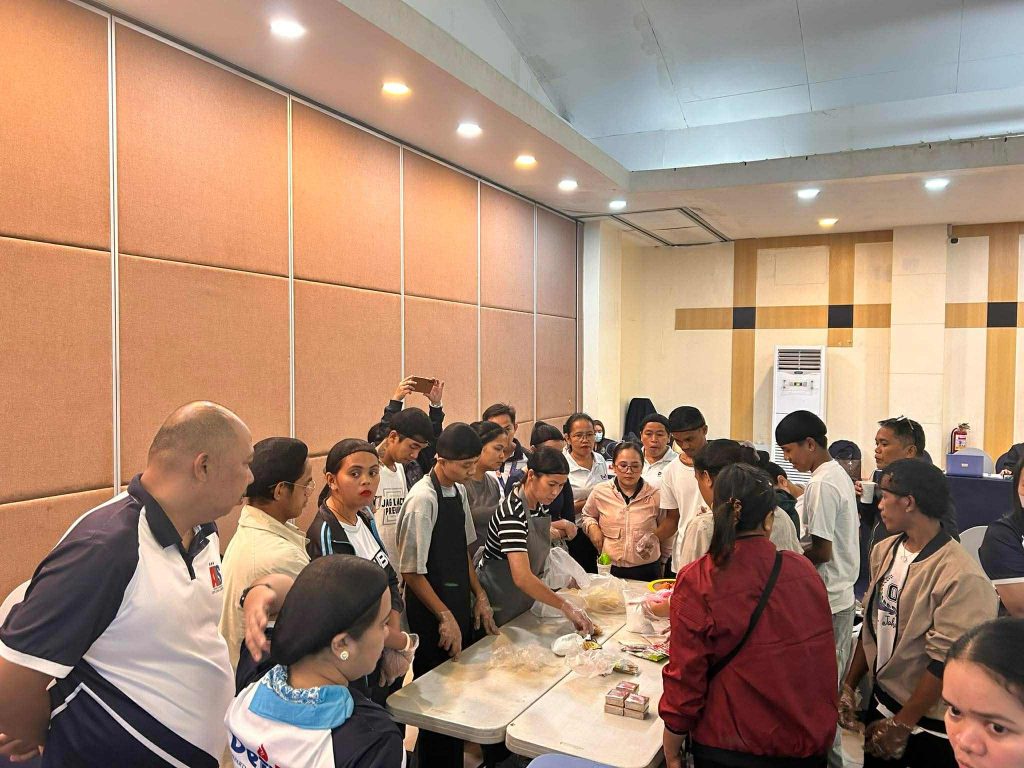
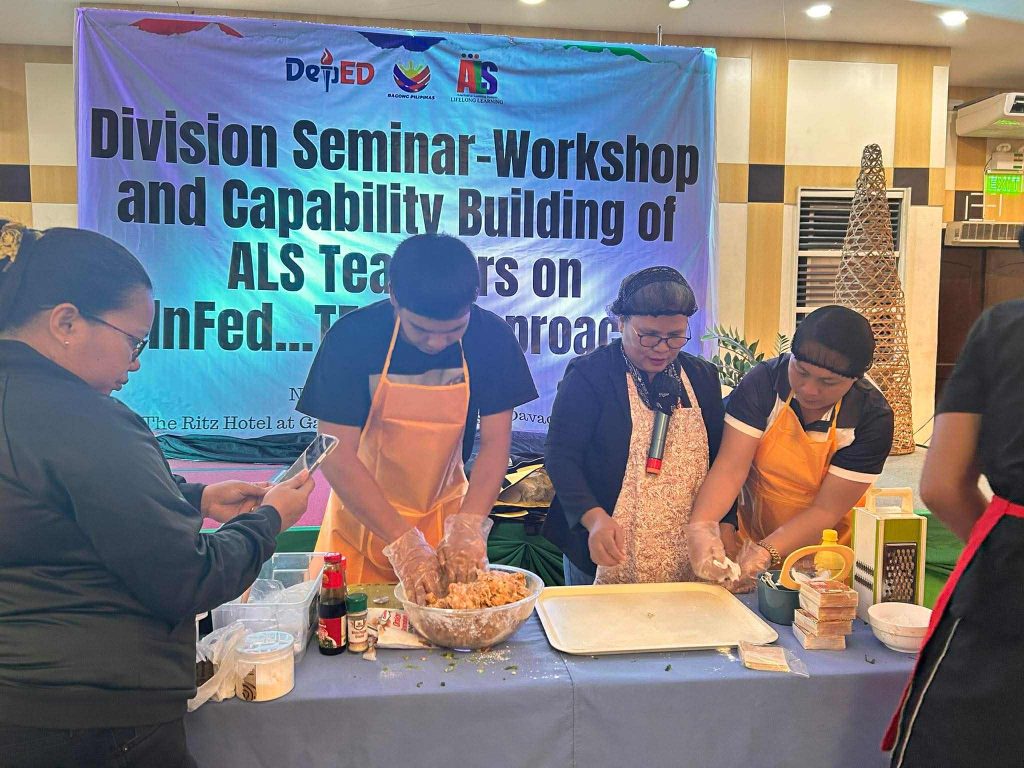
Heraclia B. Corcuera, ALS Master Teacher and InfEd Facilitator from Talomo District, conducted an engaging demonstration on siomai making. Learners were taught each step of the process—from preparation and mixing to steaming—followed by basic costing to help them understand how to price and profit from homemade products.
The workshop continued with sessions on tocino and longganisa making, facilitated by Fannie Ladringan, a TESDA partner resource speaker. Participants eagerly mixed and prepared their own products, turning the room into a laboratory of learning and discovery.
To reinforce their learning, participants performed actual costing computations for each product they created. This allowed them to better understand business expenses, pricing strategies, and potential earnings—skills essential for starting a small home-based livelihood.
Learners also wrote reflections on their training experience, expressing excitement, gratitude, and a renewed sense of purpose as they discovered new skills they could use for employment or entrepreneurship.
By: Jan Paola V. Bulacito